

28 Apr 2026
If you’ve recently bought an electric vehicle, or you’re thinking about it, one of the first questions you’ll ask is how and where you’ll charge it: at home or in public?
EV charging at home vs public options each have advantages. In this guide, we’ll break down the real differences between home EV charger vs public charging, including cost, convenience and long-term value, so you can decide what works best for you.
How EV Charging at Home Works
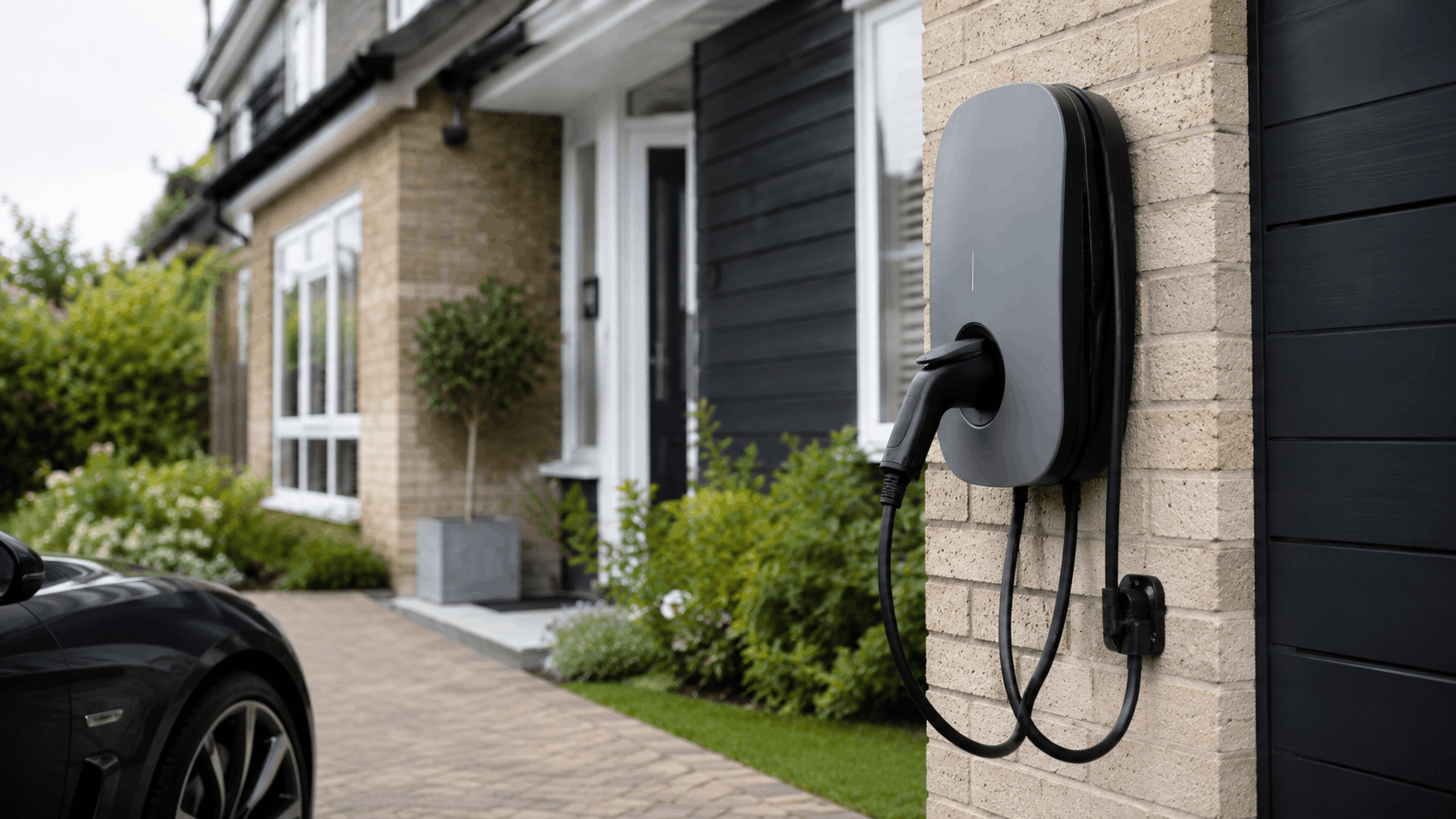
Home EV charging typically involves installing a dedicated wall-mounted charger, usually rated at 7kW for most UK properties. This allows you to charge your vehicle safely and efficiently from your domestic electricity supply.
Most drivers charge overnight, either on a standard tariff or a smart time-of-use tariff with cheaper off‑peak rates.
When looking at EV home charging cost UK, the biggest factor is your electricity rate. Charging during off‑peak hours can significantly reduce costs compared to daytime rates.
Benefits of Home EV Charging
The main benefits of home EV charging include:
- Charging overnight while you sleep
- Lower electricity rates (especially on EV tariffs)
- No need to visit a charging station
- Consistent and predictable charging access
For many homeowners with a driveway or garage, this convenience alone answers the question: should I install a home EV charger UK?
How Public EV Charging Works
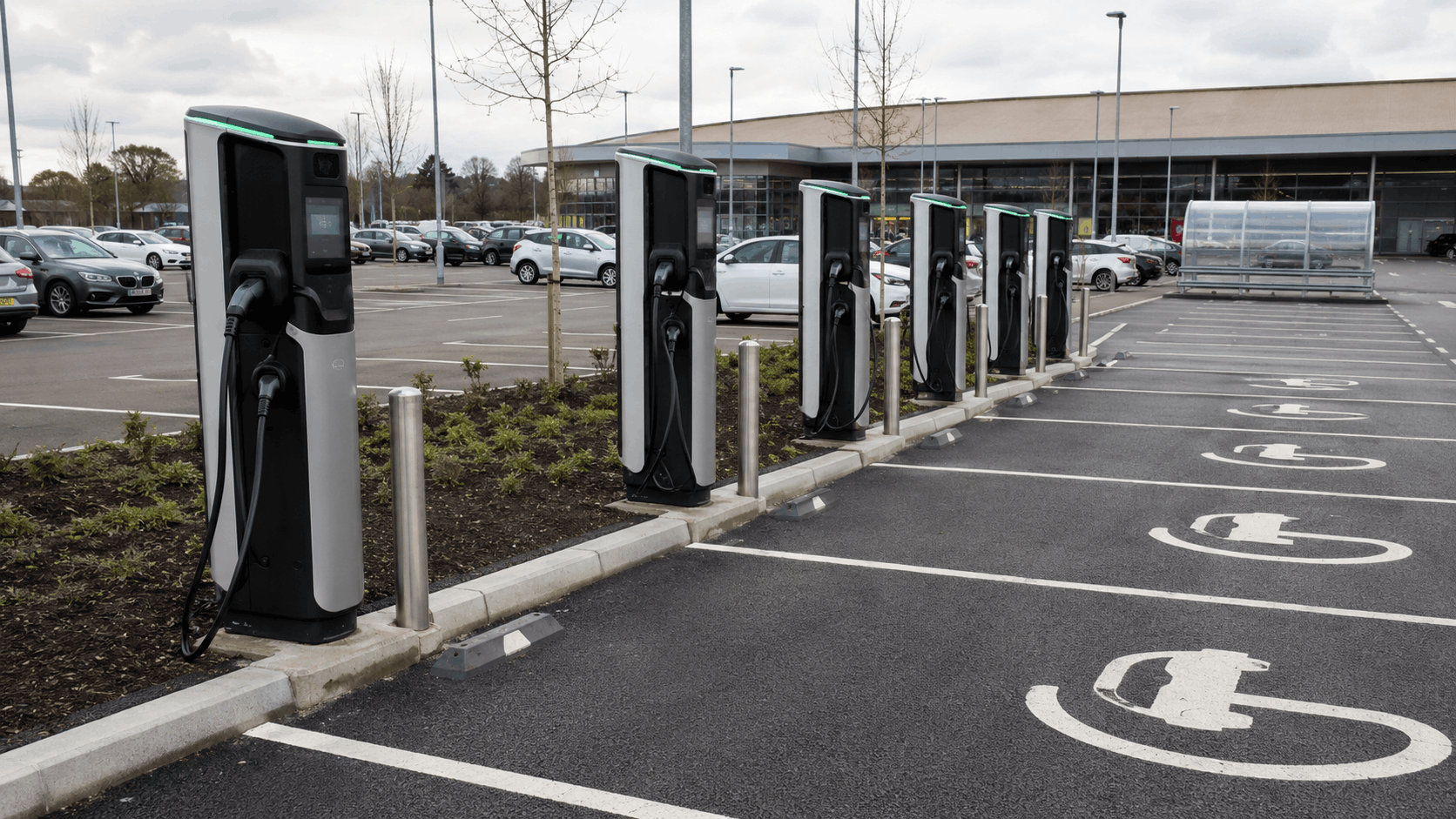
Public charging stations are located in supermarket car parks, service stations, retail parks and on-street locations. They vary in speed and pricing.
There are generally three types:
- Fast chargers (typically 7–22kW)
- Rapid chargers (around 50kW)
- Ultra-rapid chargers (150kW+)
Rapid and ultra-rapid chargers can recharge a vehicle much faster than most home units, particularly useful on long journeys.
However, public EV charging prices UK vary widely depending on the network, location and charger speed. Some networks offer subscription discounts, while others operate on pay-as-you-go pricing.
When comparing public vs home EV charging, speed is often the biggest advantage of public rapid chargers, but cost is where differences become more noticeable.
Cost of Charging an Electric Car in the UK
Cost is usually the deciding factor in any EV charging comparison in the UK.
EV Home Charging Cost UK
The cost of charging an electric car in the UK at home depends on your electricity tariff and your vehicle’s battery size.
As a rough guide:
- Standard domestic electricity rates may sit around 25–30p per kWh.
- Off‑peak EV tariffs can drop significantly lower during night hours.
For a typical EV with a 60kWh battery, a full charge at standard rates might cost around £15–£18. On a cheaper off‑peak tariff, that cost could be noticeably lower.
This is why many drivers ask: is it cheaper to charge EV at home in the UK?
In most cases, yes, particularly if you use an EV-specific tariff.
Public EV Charging Prices UK
Public charging is usually more expensive per kWh than home charging.
Typical public charging prices can range significantly depending on charger type:
- Fast chargers: higher than home rates
- Rapid and ultra‑rapid chargers: often the highest per kWh pricing
A full rapid charge for a 60kWh battery can cost considerably more than charging at home, especially at motorway service stations.
That’s where the difference in EV charging cost home vs public becomes clear. Public charging offers speed and convenience on the go, but usually at a premium.
EV Charging Cost Home vs Public: Side-by-Side
Here’s a simple comparison:
| Factor | Home Charging | Public Charging |
| Cost per kWh | Usually lower | Usually higher |
| Off-peak savings | Available | Rare |
| Upfront cost | Charger installation required | None |
| Charging speed | Moderate (7kW typical) | Fast to ultra-rapid available |
| Convenience | Charge overnight at home | Travel required |
When comparing home vs public EV charging cost in the UK, most drivers find that home charging is more economical long term, while public charging is best suited for top-ups and long journeys.
Benefits of Home EV Charging
While public chargers are essential for long-distance travel, home charging offers several long-term advantages.
The key benefits of home EV charging include:
- Lower cost per mile
- Predictable charging routine
- No waiting or queuing
- Smart scheduling through apps
- Potential to pair with solar panels
For drivers who commute daily and return home each evening, charging at home is often the simplest and most cost-effective solution.
This is why many EV owners eventually move from relying on public networks to installing a home charger.
When Public Charging Makes More Sense
Home charging isn’t always possible, and that’s where public infrastructure plays a vital role.
Public charging may be the better option if:
- You don’t have off-street parking
- You live in a flat or apartment
- You rent and cannot install a charger
- You frequently travel long distances
- You only use an EV occasionally
In these situations, public vs home EV charging isn’t about cost alone, it’s about practicality.
The UK’s public charging network continues to expand, making EV ownership viable even without home installation.
Which Option Is Right for You?
When weighing up home EV charger vs public charging, the right choice depends on your lifestyle.
Home charging is usually best if you:
- Have a driveway or garage
- Drive daily
- Want the lowest cost per mile
- Prefer convenience and routine
Public charging may suit you if you:
- Don’t have suitable parking
- Mainly need rapid charging on long journeys
- Use your vehicle less frequently
For many EV owners, the most practical solution is a combination, charging at home for everyday use and relying on public rapid chargers when travelling.
Understanding the real differences in EV charging at home vs public options helps you make an informed decision based on cost, access and convenience, rather than assumptions.
EV Charger Installation in Bolton & the North West
If you’re considering a home EV charger, professional installation is essential to ensure safety, compliance and long-term reliability.
At Bolton Electrical Services, we install smart EV chargers for homeowners and businesses across Bolton and the wider North West.
As an OLEV-approved installer, all work is carried out to current UK regulations, giving you confidence that your system is safe, efficient and future-ready.
Safe, Compliant Installation
EV chargers draw significant power, so proper circuit design, load balancing and protection are critical. We assess your existing electrical supply, consumer unit capacity and earthing system to ensure everything is installed correctly and safely.
Smart Charger Solutions
We install modern smart chargers that allow you to:
- Schedule off‑peak charging
- Monitor energy usage
- Integrate with EV tariffs
- Control charging remotely via app
This helps maximise savings when comparing home EV charger vs public charging, especially if you're aiming to reduce your overall EV charging cost.
Honest, Practical Advice
Not every property is the same. We’ll advise you on charger location, cable management, and whether your current supply needs upgrading. If public charging may still play a role in your routine, we’ll factor that into our recommendations, ensuring you get a solution that genuinely suits your usage.
Domestic & Commercial Installations
We install EV chargers for:
- Homeowners
- Landlords
- Apartment blocks
- Workplaces and commercial premises
Whether you’re installing your first charger or upgrading to a faster smart unit, we’ll design a system that supports your current vehicle, and future upgrades.
EV Charging at Home vs Public FAQs
Is it cheaper to charge an EV at home in the UK?
In most cases, yes. When comparing EV charging cost home vs public, home charging is usually cheaper per kWh, especially if you use an off‑peak EV tariff. Public rapid chargers are convenient, but they typically come at a higher cost.
How much does it cost to charge an electric car at home in the UK?
The EV home charging cost in the UK depends on your electricity rate and your vehicle’s battery size. On a standard domestic tariff, a full charge for a typical 60kWh battery may cost around £15–£18. Using a smart off‑peak tariff can reduce this significantly.
What are public EV charging prices in the UK?
Public EV charging prices in the UK vary depending on the charger type and location. Fast chargers are generally cheaper than rapid or ultra‑rapid motorway chargers, which often carry the highest per kWh rates. Prices also differ between networks.
What’s the main difference between home EV charger vs public charging?
The biggest difference in home EV charger vs public charging is cost and convenience.
- Home charging is typically cheaper and more convenient for daily use.
- Public charging offers faster top-ups and is ideal for long-distance travel.
Most EV owners use a mix of both.
Is home vs public EV charging cost in the UK significantly different?
Yes, in most cases there is a noticeable difference. When comparing home vs public EV charging cost UK, home charging, particularly on off‑peak tariffs, is generally the most economical option over time.
Should I install a home EV charger in the UK?
If you have off-street parking and regularly drive your EV, installing a home charger is usually the most convenient and cost-effective solution. Many drivers who initially rely on public networks later decide that the benefits of home EV charging, including lower costs and overnight convenience, make installation worthwhile.
Can I charge my EV from a normal plug socket?
Technically yes, but it’s much slower and not ideal for daily charging. A dedicated wall charger is safer, faster and designed specifically for regular EV use. This is why most homeowners opt for professional installation rather than relying on a standard socket.
Is public EV charging ever the better option?
Public charging makes sense if you don’t have a driveway, live in a flat, rent your property, or regularly travel long distances. In those situations, public vs home EV charging isn’t just about cost, it’s about practicality and access.


